

Νέα
Φεβ . 25, 2026 10:25 Πίσω στη λίστα
Tetrasodium Iminodisuccinate: A Multifunctional Chemical Solution
Introduction
In the ever - evolving landscape of chemical applications, substances that offer versatility, efficiency, and environmental friendliness are highly sought after. Tetrasodium Iminodisuccinate, a product provided by Hebei Think Do Chemicals Co., Ltd, has emerged as a compound that fits this description perfectly. This unique chemical has found its way into numerous industrial processes and applications, thanks to its remarkable properties. As a key player in the realm of chelating agents, Tetrasodium Iminodisuccinate has the ability to bind with metal ions, which is crucial in a variety of contexts. It is not just another chemical; it is a solution that addresses multiple challenges faced by different industries. In this article, we will delve deep into the world of Tetrasodium Iminodisuccinate, exploring its chemistry, applications, and advantages.
The Chemistry of Tetrasodium Iminodisuccinate
Molecular Structure and Composition
Tetrasodium Iminodisuccinate has a complex yet fascinating molecular structure. It consists of an iminodisuccinic acid backbone with four sodium ions attached. The iminodisuccinic acid part of the molecule contains nitrogen and carboxyl groups. These functional groups are responsible for its chelating ability. The carboxyl groups can donate electron pairs to metal ions, forming stable complexes. The presence of four sodium ions makes the compound highly soluble in water, which is a significant advantage in many applications where aqueous solutions are involved. This unique molecular composition gives Tetrasodium Iminodisuccinate its characteristic properties, setting it apart from other chelating agents.
Chelating Mechanism
The chelating mechanism of Tetrasodium Iminodisuccinate is based on the formation of coordinate bonds between the nitrogen and oxygen atoms in its structure and metal ions. When it comes into contact with metal ions such as calcium, magnesium, iron, or copper, the carboxyl and nitrogen groups of Tetrasodium Iminodisuccinate surround the metal ion. This results in the formation of a stable, cage - like structure known as a chelate. The stability of these chelates is due to the multiple bonding sites provided by the iminodisuccinate molecule. This ability to form strong complexes with metal ions is what makes Tetrasodium Iminodisuccinate such an effective chelating agent in various industrial processes.
Tetrasodium Iminodisuccinate as a Biodegradable Chelating Agent
Environmental Significance
In an era where environmental protection is a top priority, the biodegradability of chemicals is of utmost importance. Tetrasodium Iminodisuccinate stands out as a highly biodegradable chelating agent. It breaks down naturally in the environment through the action of microorganisms. This is in contrast to some traditional chelating agents, such as ethylenediaminetetraacetic acid (EDTA), which are persistent in the environment and can have negative impacts on aquatic ecosystems. The biodegradability of Tetrasodium Iminodisuccinate means that it can be used in applications where environmental friendliness is a key requirement, without the worry of long - term pollution.
Advantages over Non - Biodegradable Alternatives
Using Tetrasodium Iminodisuccinate instead of non - biodegradable chelating agents offers several advantages. Firstly, it reduces the environmental footprint of industrial processes. For example, in the textile industry, where chelating agents are used to remove metal ions from dyes, the use of Tetrasodium Iminodisuccinate ensures that the wastewater discharged is less polluting. Secondly, it complies with increasingly strict environmental regulations. Many countries and regions are imposing limits on the use of non - biodegradable chemicals, and Tetrasodium Iminodisuccinate provides a viable alternative that meets these requirements. Finally, it offers a sustainable solution for industries, as it can be used repeatedly without causing long - term harm to the environment.
Tetrasodium Iminodisuccinate in Industrial Cleaning
Role as an Industrial Cleaner Raw Material
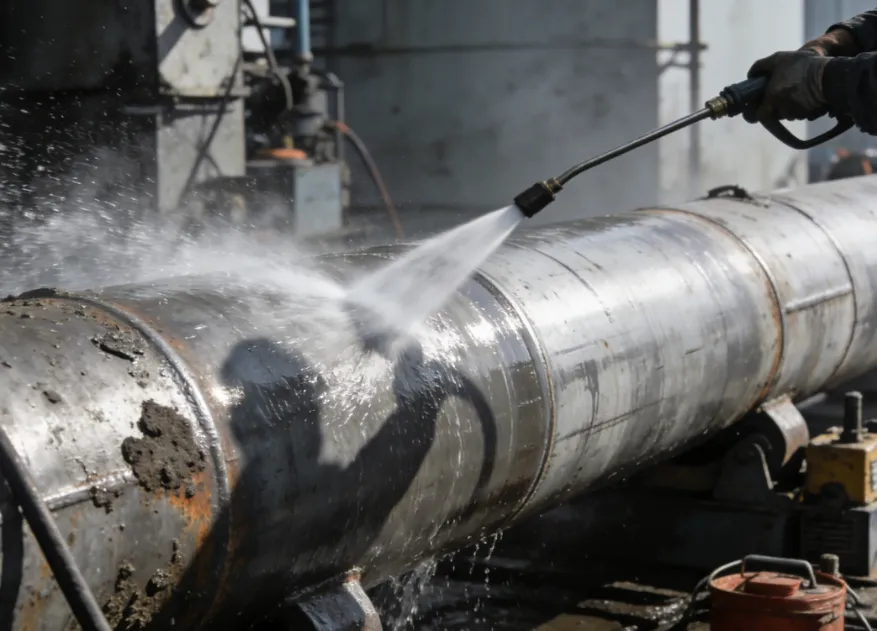
Tetrasodium Iminodisuccinate plays a crucial role as a raw material in industrial cleaning formulations. In industrial settings, surfaces often accumulate dirt, grease, and metal oxides. Metal ions present in these contaminants can interfere with the cleaning process. Tetrasodium Iminodisuccinate's chelating ability comes into play here. It can bind to the metal ions, preventing them from reacting with cleaning agents and improving the overall efficiency of the cleaning process. For example, in the cleaning of industrial equipment such as boilers and heat exchangers, where scale formation due to metal ions can reduce heat transfer efficiency, Tetrasodium Iminodisuccinate can be used to remove the scale - forming metal ions.
Formulation Considerations
When formulating industrial cleaners with Tetrasodium Iminodisuccinate, several factors need to be considered. The concentration of Tetrasodium Iminodisuccinate in the formulation depends on the type and amount of metal contaminants present. Higher concentrations may be required for heavily contaminated surfaces. The pH of the cleaning solution also affects the chelating ability of Tetrasodium Iminodisuccinate. It generally works well in a slightly alkaline to neutral pH range. Additionally, compatibility with other cleaning agents, such as surfactants and solvents, needs to be ensured. By carefully formulating industrial cleaners with Tetrasodium Iminodisuccinate, optimal cleaning performance can be achieved.
Tetrasodium Iminodisuccinate in the Oilfield Industry
Applications as an Oilfield Chemical
In the oilfield industry, Tetrasodium Iminodisuccinate has a wide range of applications. One of its primary uses is in oil well drilling. During drilling operations, the presence of metal ions in the drilling mud can cause various problems, such as clay swelling and corrosion of drilling equipment. Tetrasodium Iminodisuccinate can be added to the drilling mud to chelate these metal ions, stabilizing the mud and preventing these issues. In oil production, it can also be used to remove metal - containing impurities from crude oil. This helps in improving the quality of the crude oil and preventing corrosion in pipelines and storage tanks.
Performance Benefits
The use of Tetrasodium Iminodisuccinate in the oilfield industry offers several performance benefits. It can enhance the stability of drilling mud, ensuring smooth drilling operations. By preventing clay swelling, it reduces the risk of wellbore instability. In terms of crude oil treatment, it effectively removes metal impurities, which can improve the efficiency of downstream refining processes. Moreover, its biodegradability is an added advantage in the oilfield, as it reduces the environmental impact of oilfield operations.
Tetrasodium Iminodisuccinate as a Circulating Water Scale Inhibitor
Preventing Scale Formation in Circulating Water Systems
Circulating water systems, such as those used in power plants, cooling towers, and industrial manufacturing processes, are prone to scale formation. Scale is mainly composed of calcium, magnesium, and other metal salts that precipitate out of the water due to changes in temperature, pH, or water chemistry. Tetrasodium Iminodisuccinate acts as an effective circulating water scale inhibitor by chelating the metal ions responsible for scale formation. It keeps these metal ions in solution, preventing them from aggregating and forming scale deposits on the surfaces of pipes, heat exchangers, and other components of the circulating water system.
System - Specific Considerations
The effectiveness of Tetrasodium Iminodisuccinate as a circulating water scale inhibitor depends on several system - specific factors. The concentration of metal ions in the circulating water, the flow rate of the water, and the temperature of the system all influence the dosage of Tetrasodium Iminodisuccinate required. In systems with high metal ion concentrations or high - temperature conditions, higher dosages may be necessary. Regular monitoring of the water quality and scale formation is also essential to ensure that the appropriate amount of Tetrasodium Iminodisuccinate is being used.
FAQs
How does Tetrasodium Iminodisuccinate compare to other metal chelating agents in terms of chelating efficiency?
Tetrasodium Iminodisuccinate offers high chelating efficiency. Its multiple binding sites provided by the carboxyl and nitrogen groups in its structure allow it to form stable complexes with a wide range of metal ions. Compared to some traditional chelating agents, it can chelate metal ions more effectively in certain conditions. For example, it has a high affinity for calcium and magnesium ions, which are common scale - forming ions. Its biodegradability also sets it apart, as many traditional chelating agents may be more efficient in chelating but are non - biodegradable.
Can Tetrasodium Iminodisuccinate be used in food - related industries?
While Tetrasodium Iminodisuccinate is mainly used in industrial applications, it has potential in some food - related industries. Its chelating ability can be used to remove metal impurities from food - processing water. However, strict regulations govern its use in food - related applications. It must meet specific food - grade standards regarding purity and safety. Hebei Think Do Chemicals Co., Ltd ensures that any product intended for such applications complies with these regulations.
What is the optimal pH range for Tetrasodium Iminodisuccinate to function as a chelating agent?
Tetrasodium Iminodisuccinate generally functions well in a slightly alkaline to neutral pH range, typically around pH 6 - 9. In this pH range, the carboxyl groups in its structure are in an appropriate state to donate electron pairs to metal ions and form stable chelates. At very low or very high pH values, the chelating ability may be reduced. For example, in highly acidic conditions, the carboxyl groups may be protonated, reducing their ability to bind to metal ions.
How is Tetrasodium Iminodisuccinate produced by Hebei Think Do Chemicals Co., Ltd?
Hebei Think Do Chemicals Co., Ltd produces Tetrasodium Iminodisuccinate through a carefully controlled chemical synthesis process. The production involves the reaction of specific starting materials under precisely regulated conditions. Quality control measures are implemented at every stage of production to ensure that the final product meets high - quality standards in terms of purity, chelating ability, and biodegradability. The company also adheres to strict environmental and safety regulations during the production process.
Are there any side effects of using Tetrasodium Iminodisuccinate in industrial applications?
When used as directed, Tetrasodium Iminodisuccinate has few side effects. However, in some cases, if the dosage is too high, it may cause foaming in certain systems, especially in industrial cleaning applications. This can be managed by adjusting the dosage or adding anti - foaming agents. Also, in very rare cases, some materials may be slightly affected by the chelating action of Tetrasodium Iminodisuccinate. It is important to conduct compatibility tests before large - scale use in any specific industrial process.
Conclusion
Tetrasodium Iminodisuccinate, offered by Hebei Think Do Chemicals Co., Ltd, is a versatile and environmentally friendly chemical with a wide range of applications. Its unique properties as a biodegradable chelating agent make it a valuable asset in industries such as industrial cleaning, oilfield operations, and circulating water systems. Whether it is used to enhance the efficiency of cleaning processes, improve oilfield operations, or prevent scale formation in circulating water, Tetrasodium Iminodisuccinate proves to be an effective solution. As industries continue to seek sustainable and efficient chemical solutions, the role of Tetrasodium Iminodisuccinate is likely to become even more significant. By understanding its chemistry, applications, and optimal usage conditions, industries can fully leverage the potential of this remarkable compound.
-
Polyaspartic Acid vs. EDTA in Agriculture: A Comparative Analysis
ΝέαApr.14,2026
-
Polyaspartic Acid vs. EDTA in Industrial Applications: A Comprehensive Comparison
ΝέαApr.14,2026
-
Unveiling the Wonders of Imidodisuccinic Acid (IDS) in Textile Industry Operations
ΝέαApr.08,2026
-
Imidodisuccinic Acid (IDS): Transforming Textile Industry Applications
ΝέαApr.08,2026
-
Polyaspartic Acid in Oil Field Operations: Unlocking Its Potential for Scale Control, Fluid Optimization, and Infrastructure Preservation
ΝέαMar.30,2026
-
Polyaspartic Acid: The All - around Solution for Oil Field Challenges - Scale Inhibition, Corrosion Prevention, and More
ΝέαMar.30,2026
 Greek
Greek  English
  Afrikaans
  Albanian
  Arabic
  Belarusian
  Bosnian
  Bulgarian
  Croatian
  Czech
Czech  Danish
  Dutch
Dutch  Esperanto
  Estonian
  Finnish
  French
  German
  Hebrew
  Hindi
Hindi  Hungarian
  Icelandic
  Indonesian
  Irish
Irish  Italian
  Japanese
  Kazakh
  Korean
  Latin
Latin  Latvian
  Lithuanian
  Luxembourgish
  Macedonian
  Malay
Malay  Norwegian
  Persian
  Polish
  Portuguese
  Punjabi
  Romanian
  Russian
  Serbian
  Slovak
  Slovenian
  Spanish
  Swedish
  Tagalog
  Thai
Thai  Turkish
  Uzbek
Uzbek  Vietnamese